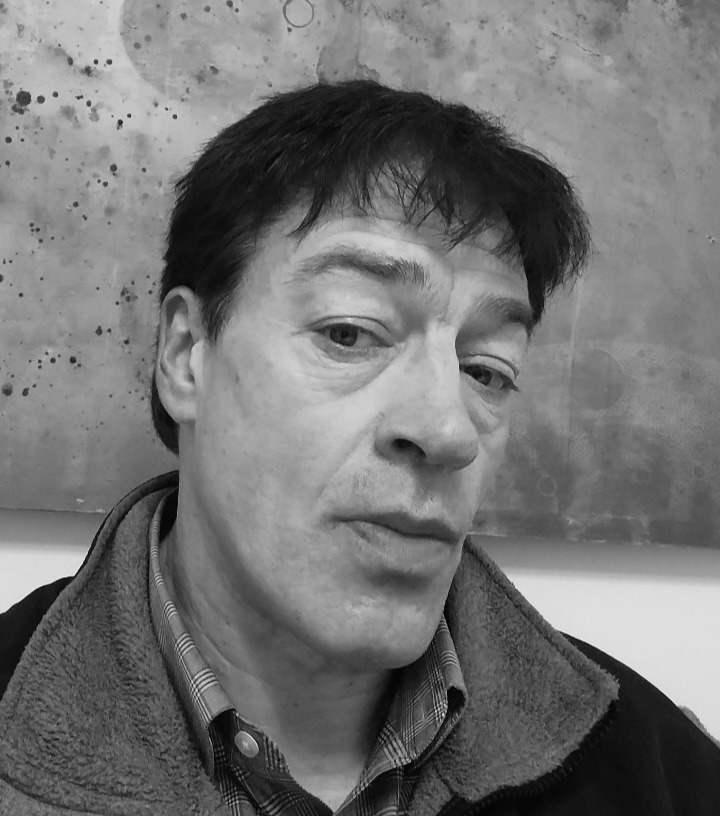
writes and edits at the intersection of sacred geometry, initiatory architecture, and the operational logic of esoteric ritual. His work treats the lodge and temple as instruments: orientation, proportion, stations, and timed procedure are not ornament, but the machine that carries an initiate from instruction into transformation. Drawing on the transmission from operative building traditions into speculative Orders, he examines how tools and symbols function as a disciplined grammar for moral formation and spiritual development, and how sacred space—whether constructed or encountered in the landscape—may be aligned to cosmic order. In sacred land reflections, he approaches place as a working: thresholds, directions, and seasonal cycles become ritual variables that shape the charge, the interior “temple,” and the Great Work.
Darcy
Küntz
Contributors
With thanks to the incredible work done by all those who spend time with the numinous in-between, helping us all go a littte deeper...
Nadia
Colburn
Dawn
Eva
explores the relationship between personal & environmental devastation & renewal, mourning & celebration. Her poetry and creative nonfiction have been published in The New Yorker, American Poetry Review, The Sun, Spirituality & Health, Lion’s Roar, and The Yale Review. Nadia founded the Align Your Story writing school, which brings together literary studies, creative writing, mindfulness and embodied practices, and which has a community of over 30,000 mindful writers. Nadia holds a Ph.D. in English from Columbia University and a B.A. from Harvard, is a certified Kundalini yoga teacher, practices in Thich Nhat Hanh’s tradition, and is a student of indigenous healing. She’s also the mother of two young adult children. When she’s not in Cambridge, MA, she can often be found at a 12x12 off-grid cabin in Vermont.
is an Alchemist and Facilitator working at the threshold between the sacred and the material. Her practice explores how apparent dualities - reason and mystery, precision and the numinous, form and formlessness - transform not through opposition but through the living relationship between them.
Drawing on over twenty years balancing systems logic and military discipline with dimensional awareness and the ineffable, she holds this tension as generative rather than contradictory.
Grounded in the Western mystery teachings and in Celtic traditions that honoured the sacred in-between as the foundation of their culture, her work seeks to spiritualise matter and root the intangible in tangible form - building vessels through which what lies beneath the surface can be encountered.
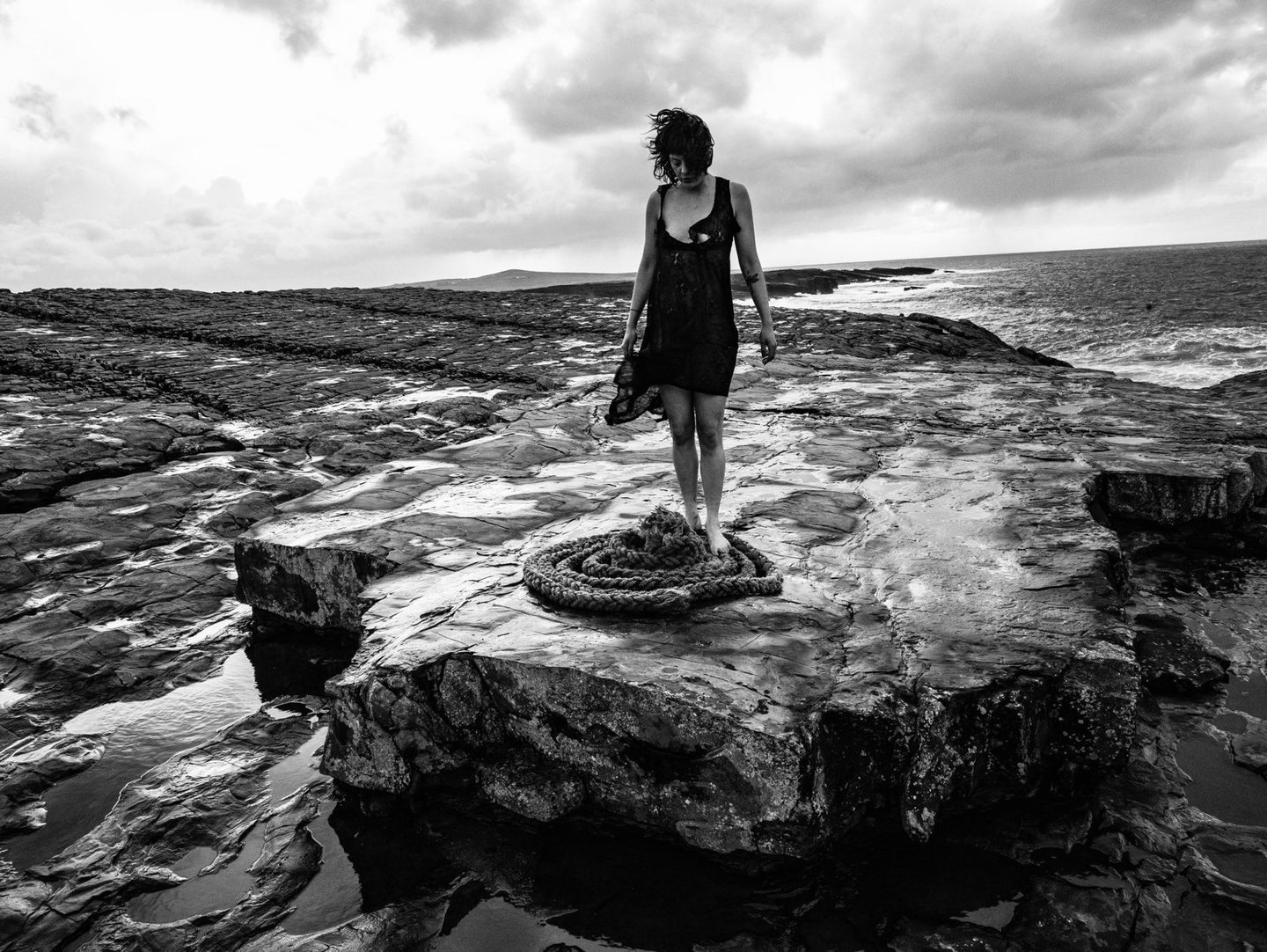
is an interdisciplinary artist and performer based in Cork, Ireland; currently undertaking the MA ‘Art, Psyche & Creative Imagination’ in Jungian studies.;
Through the media of photography, filmmaking, writing, performance and sound, her work explores the threshold between dream, land, and the other than human seeking an authentic and vulnerable dialogue through presence and embodied actions. With a background in post-growtoskian theatre and Ecosomatic practices, Her art is rooted in visionary and ritualistic states. By engaging with symbols and archetypes that emerge from these states, the artist seeks to revive an intimate relationship with body and land, ancestry and spirit while challenging ingrained systems of oppression.
Sophia Felumaz Santabarbara
Mae
Dea
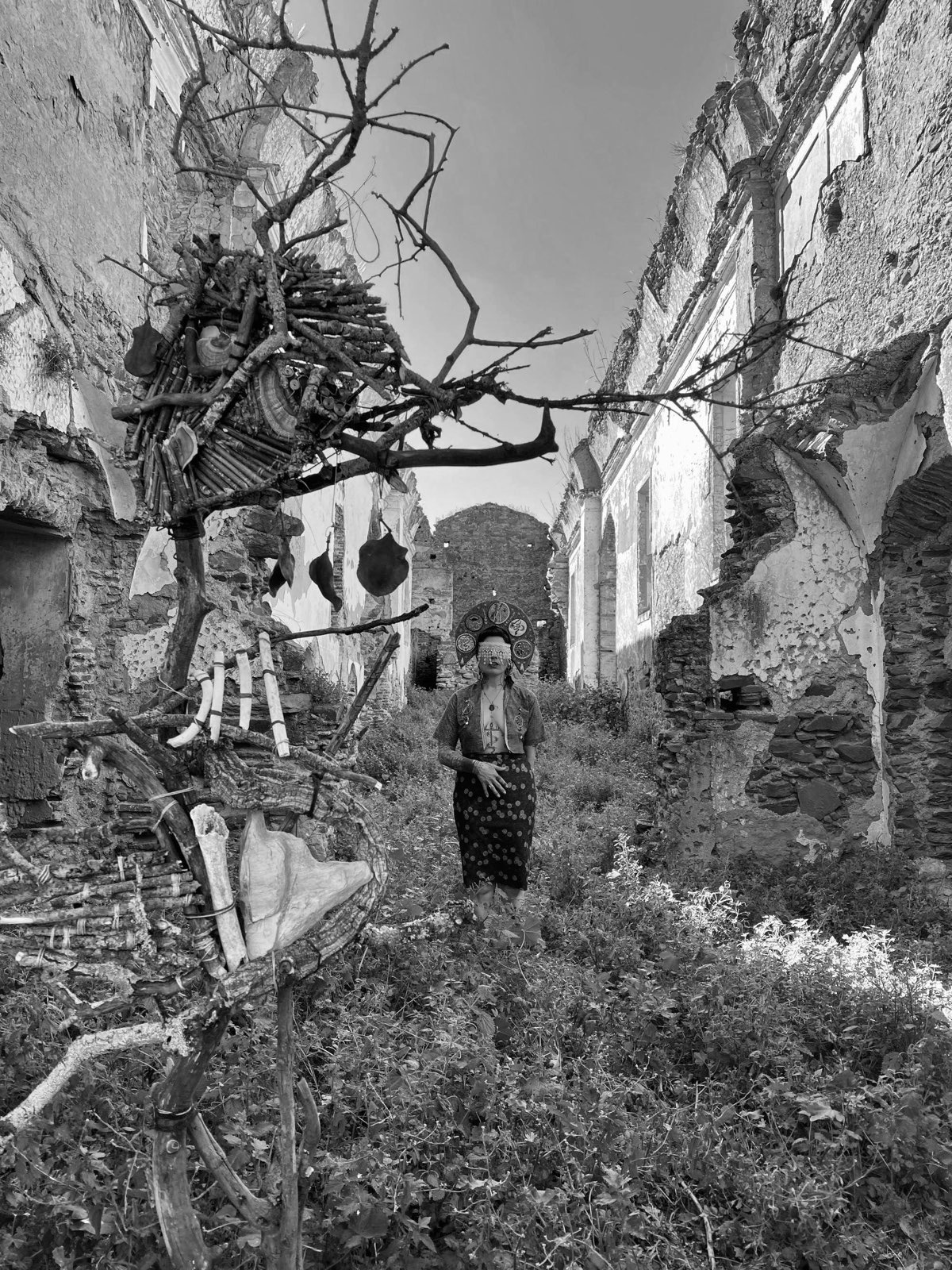
is an interdisciplinary artist based out of cork, Ireland. Their work is rooted in animist and initiatory traditions and shaped by anti-colonial and anti-imperialist ethics, exploring how ritual can midwife transformation in both personal and collective life.
Through mentorship, ritual containers, and devotional art-making, MaeDea engages ancestry as a living field and practices deep listening, seasonal attunement, and relational presence. MaeDea’s path has been shaped by long-term initiation in community ritual and training in somatic and healing modalities. They are drawn to slow practice, liminal states, and threshold spaces, and to the ways ritual can restore belonging between body and land.
Artem Trofimenko
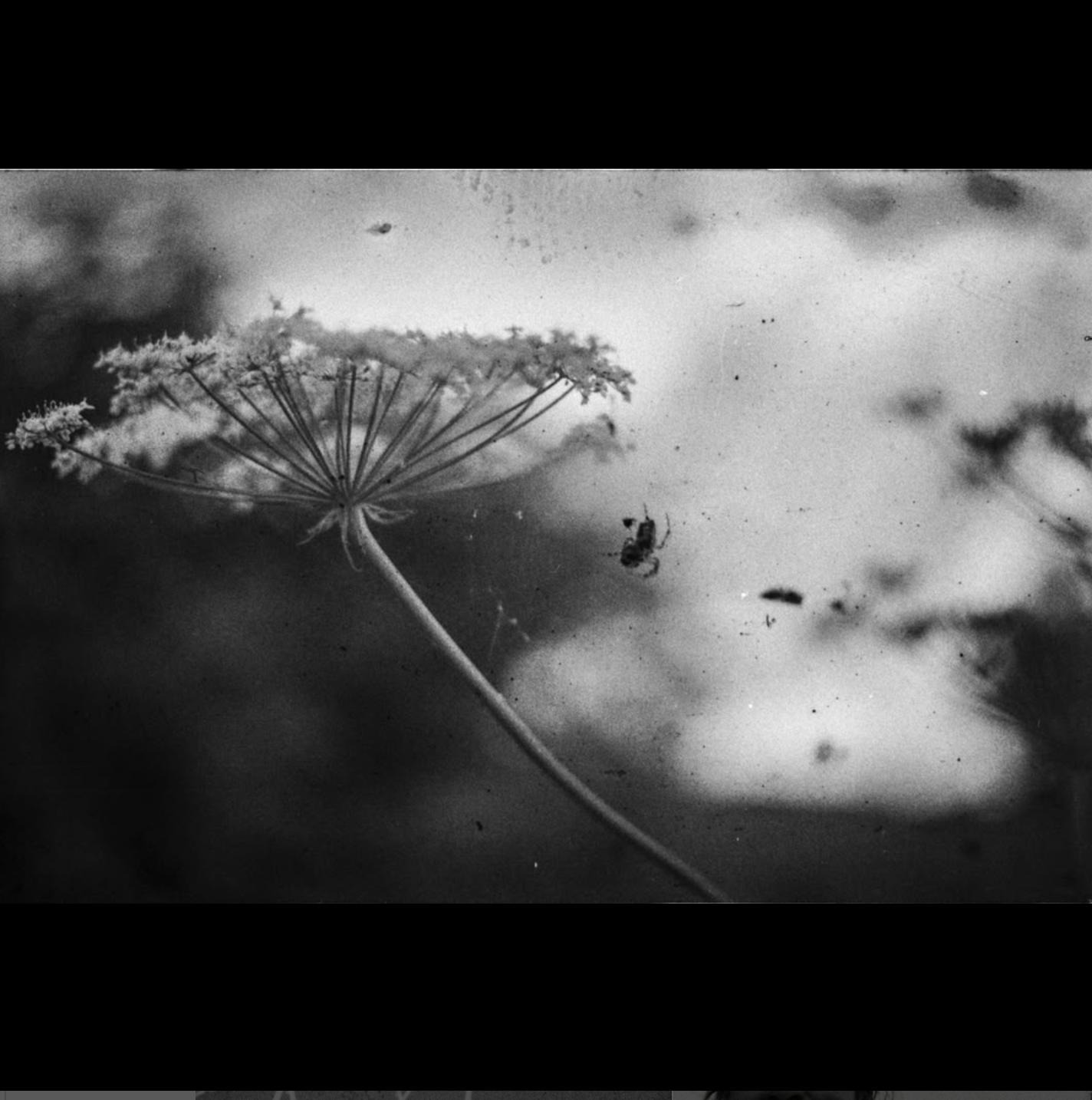
is an Irish–Ukrainian artist based in Cork working across film, performance, sound, text and photographic installation. Their practice explores the poetics of displacement: how memory, perception, and history settle in the body, and how seeing itself can become a form of exile. Working with analogue film, darkroom processes, and found light—understood as naturally occurring illumination revealed through chance—Artem traces correspondences between landscape and inner life. The work seeks fugitive, embodied forms of knowledge that emerge through contact and sensation, and resist being stabilised into language or image. Film is approached as a tactile, vulnerable surface, while performance activates the body as a reactive site of encounter.
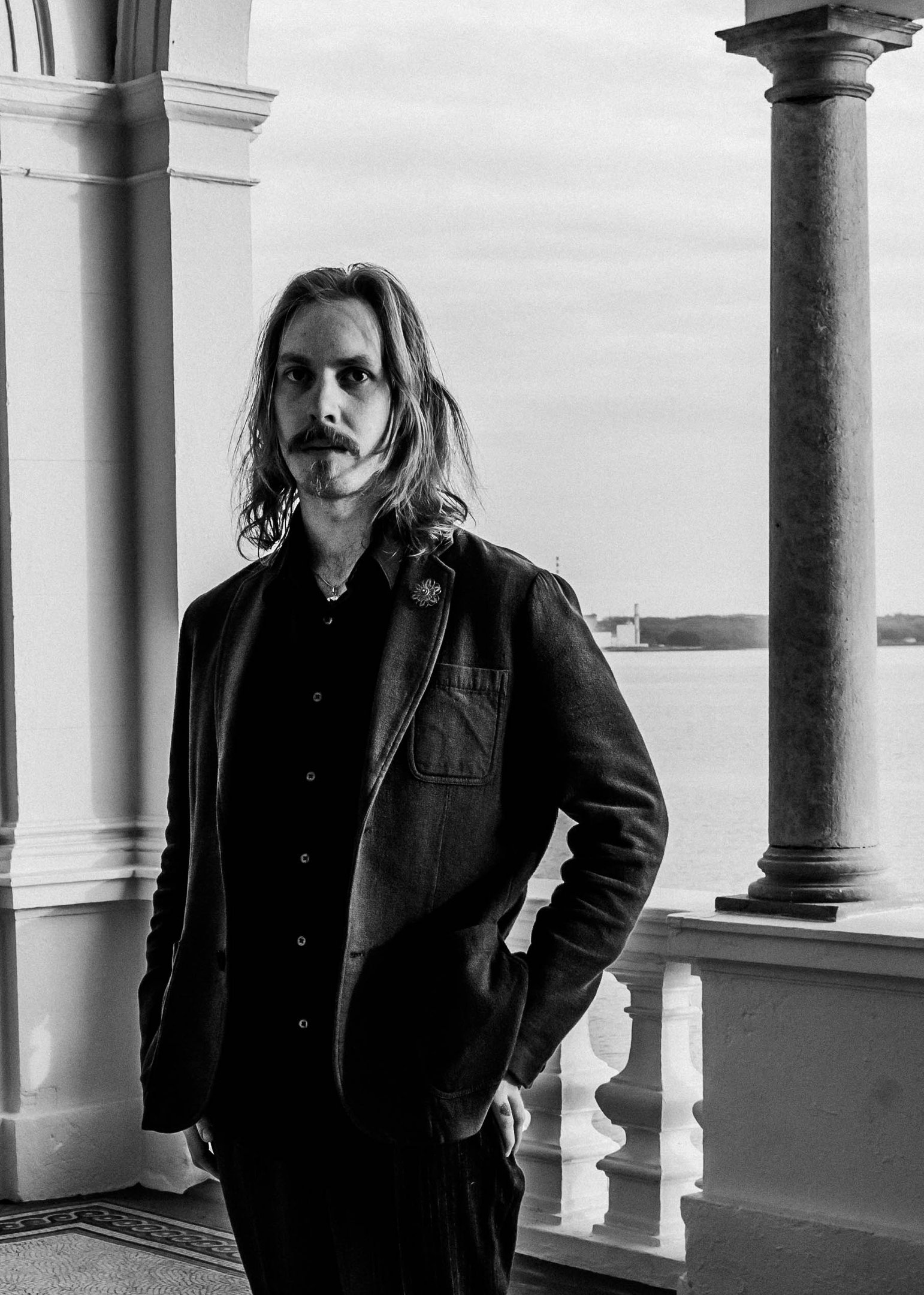
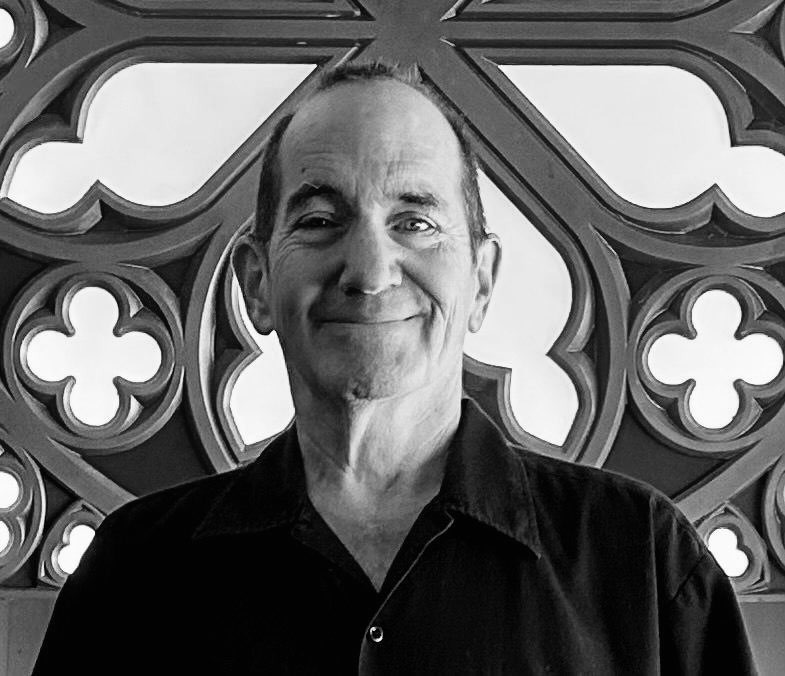
writes and edits at the intersection of sacred geometry, initiatory architecture, and the operational logic of esoteric ritual. His work treats the lodge and temple as instruments: orientation, proportion, stations, and timed procedure are not ornament, but the machine that carries an initiate from instruction into transformation. Drawing on the transmission from operative building traditions into speculative Orders, he examines how tools and symbols function as a disciplined grammar for moral formation and spiritual development, and how sacred space—whether constructed or encountered in the landscape—may be aligned to cosmic order. In sacred land reflections, he approaches place as a working: thresholds, directions, and seasonal cycles become ritual variables that shape the charge, the interior “temple,” and the Great Work.
Some
One
Mary W
Craig
Some
One
"I like to explore various aspects of the history, myths and legends of the Celtic lands of of northern Europe."
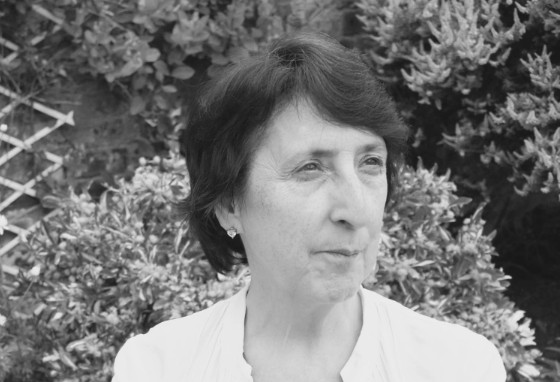
MARY CRAIG is a distinguished writer and historian residing in Scotland. She earned her academic credentials as a Carnegie scholar and completed her education at the University of Glasgow. With a focus on central European history, Craig combines her roles as a working historian and a prolific writer. Her contributions to the field underscore her commitment to advancing historical understanding and engaging diverse audiences in the study of history.
is an Alchemist and Facilitator working at the threshold between the sacred and the material. Her practice explores how apparent dualities - reason and mystery, precision and the numinous, form and formlessness - transform not through opposition but through the living relationship between them.
Drawing on over twenty years balancing systems logic and military discipline with dimensional awareness and the ineffable, she holds this tension as generative rather than contradictory.
Grounded in the Western mystery teachings and in Celtic traditions that honoured the sacred in-between as the foundation of their culture, her work seeks to spiritualise matter and root the intangible in tangible form - building vessels through which what lies beneath the surface can be encountered.
Gillian
Anderson
Kate
Bradley
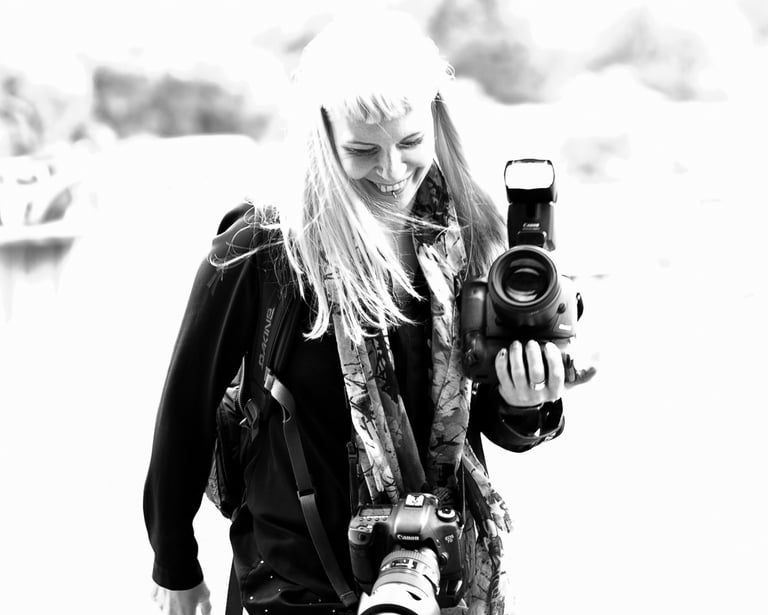
has been taking photos of everything and anything for about 40 years. "My style has evolved over the years, but a constant throughout my work is a fascination with light, shadow, and texture. I am drawn to the macabre and the abandoned, often reworking these subjects into something playful or unexpected."
At the heart of her work is a love of contrast: vibrant colour set against decay, modern objects or equipment placed within natural or forgotten environments, and moments of visual tension found in unlikely places. "I enjoy capturing striking imagery where those opposites meet, allowing familiar scenes to feel slightly off-balance or unusual."
is a multi-disciplinary artist from Gateshead now based in Glasgow, exploring writing and sound. They work as a maker, performer, and technician in DIY and experimental settings, amplifying art for the people by the people wherever they can. Rooted in a folk-style of storytelling, their work engages with autobiography and senses of place. These two poems, "Chrysalis" and "to a dead rabbit", connect with Imbolc in quite different ways. "Chrysalis" depicts rapid transformation in the shifting seasons, the kind that leaves you untethered to yourself. "To a dead rabbit" is both sweet and uncanny, an unsettling yet honest depiction of unrequited love, finding peace in the grotesque.
Nasrin
Golden
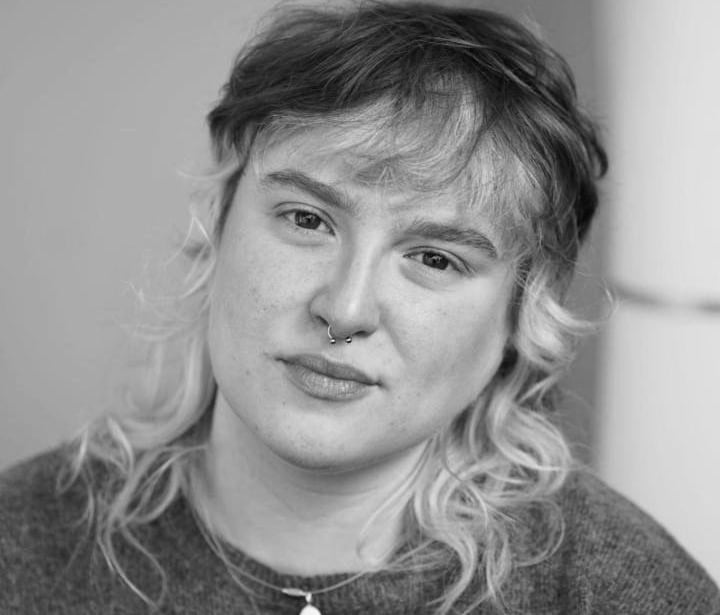
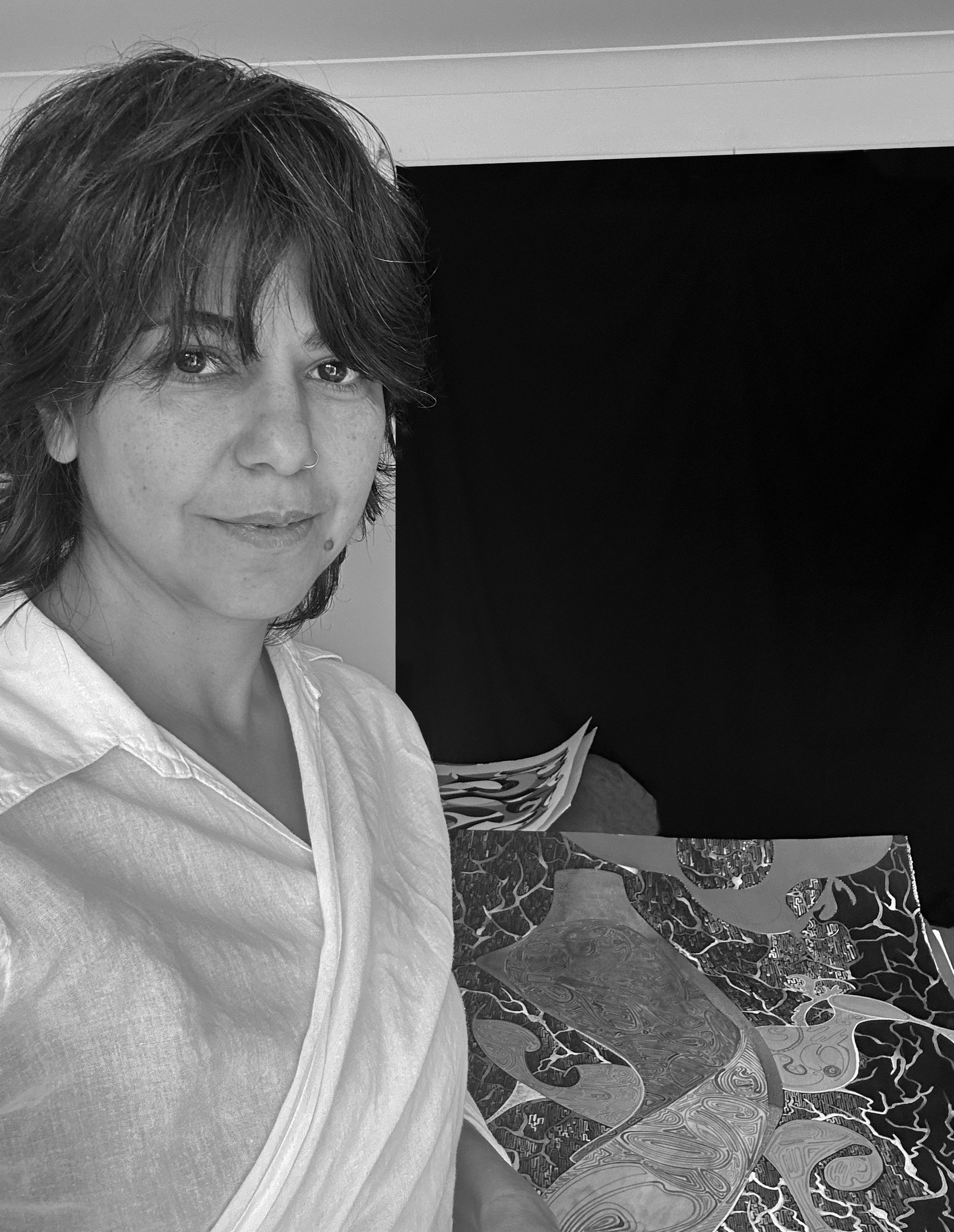
Her work arises from listening to land, body, silence, and the subtle spaces between worlds, allowing meaning to emerge rather than be imposed. She is a nomadic Iranian artist, writer, and weaver, primarily based in Ireland, working across text, moving image, painting, photography, and collective practice. Her practice moves through place, memory, and the body, guided by mythic sensibilities and quiet forms of knowing. She is drawn to thresholds and pauses, where what appears still or empty holds movement, and where making becomes a way of listening and weaving relation.
is a MA Graduate in Jungian Studies: Art, Psyche & Creative Imagination, and trained Integrative Therapist, based in Dartmoor, Devon, England. For over a decade, she has immersed herself in deep spiritual practice within the realms of Advaita Vedanta, Rose & Red Path wisdom; as well as Depth Psychology. She offers immersive and transformational spaces for individuals and groups to remember the gold of their own Soul via her modern day Mystery School Sanctuary Rosa Mystica and private practice, Dartmoor Rose.
Turiya
Ma
Ross
McDiarmid
"I believe that there is much to mined in the fruitful synergy between mythology, religiosity, and deep time (specifically in its guises of geology, evolution, and ecology). There exists a strange richness associated with death, able to delight as much as it overawes. These sublime dynamics have long been associated with the power inherent to the land, one that can leave us as stricken as the figure within Caspar David Friedrich’s The Monk by the Sea. And yet, like over-abounding viral omnipresences, individual things persist the whirligigs of time. I believe art is well-placed to mediate this fine balance between such deeply impersonal forces and yon forces of personality accompanying us in the Holocene Catalogue of the Ships."
The included pieces focus on ideas related to cycles, transitions, and syzygies.
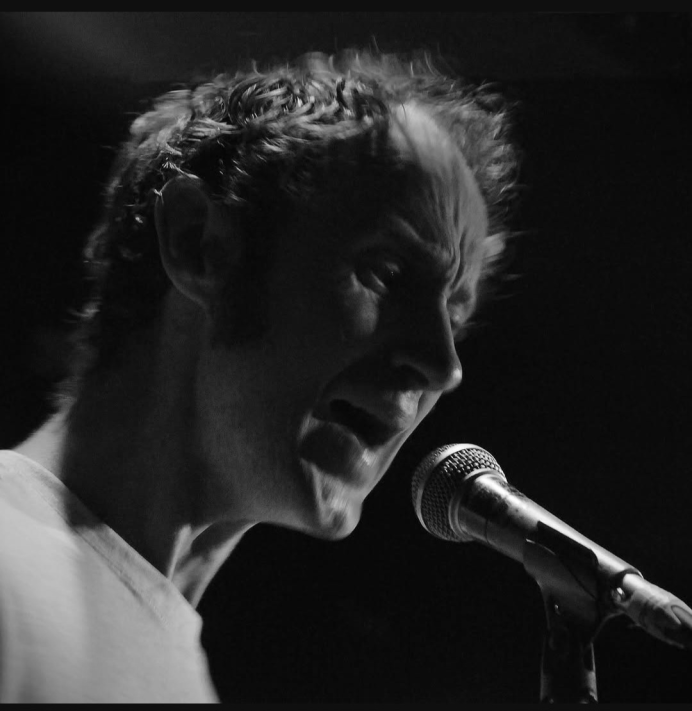
Profile image taken by Stephen Matthews
Brendan Duffin is a writer, musician and photographer. He is the 2025 winner of the Noel Brazil Song Competition and is a member of 'MacBóchra'. Named after the oldest seanchaí and shapeshifter Fintan mac Bóchra, the band adapts seanchas and béaloideas into new music, poetry, visual art and dance. They have released two EP's to date on bandcamp: 'Inis Ealga/Inis Fáil' and 'MacBóchra'. They are currently working on their first album.
Phil
Spillane
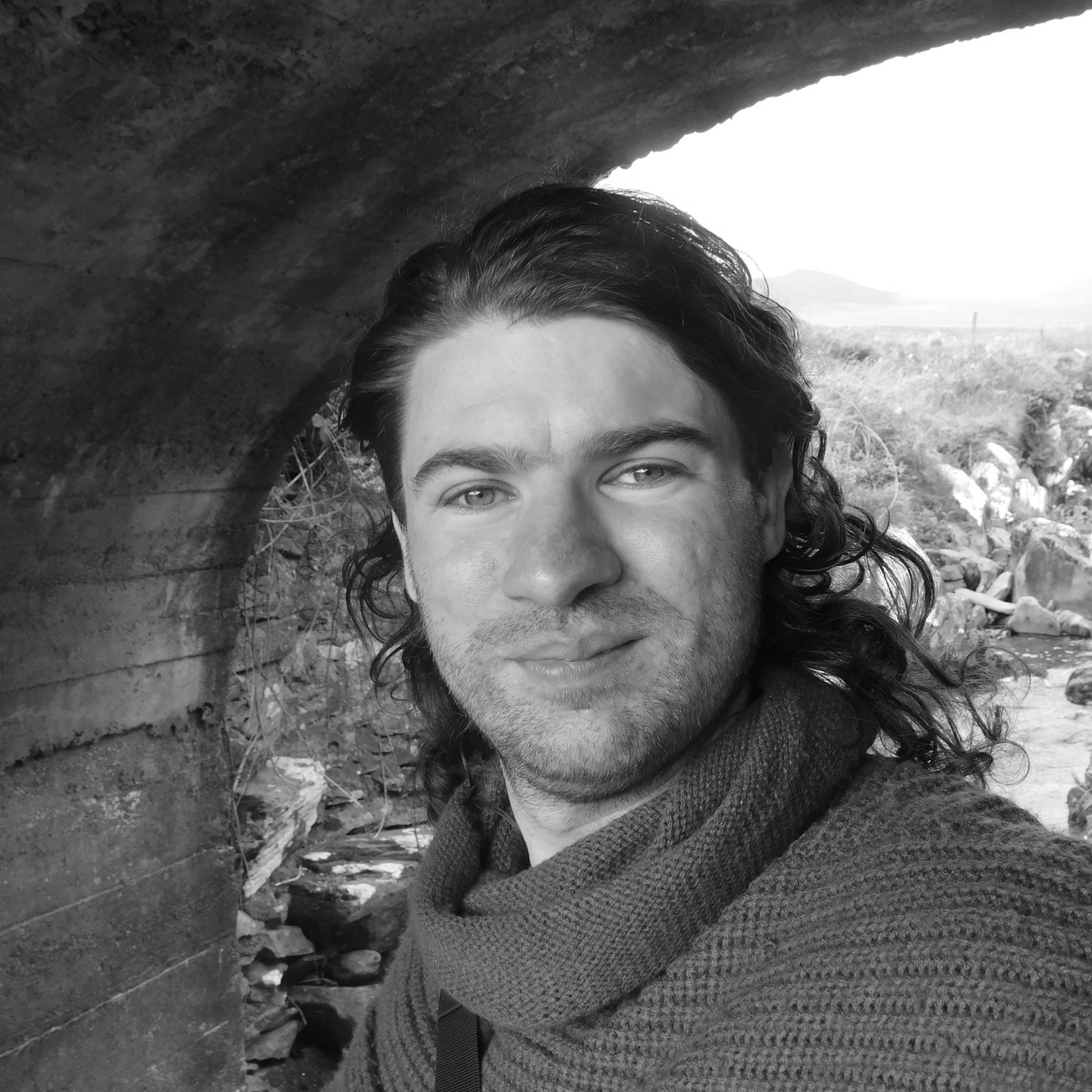
Phil Spillane is a writer, poet, filmmaker, and musician from Cork, he has an MA in Creative Writing and is currently a board member of the poetry organisation Ó Bhéal go Béal.
In 2025 he performed in Coventry, England, as part of the Twin Cities Poetry exchange, and his poetry film The Greenman was featured at PÖFF film festival in Estonia. His poems have been published in Good Day Cork, What Now, Cork Words 3, and The Ogham Stone.
He currently runs an arts podcast called the Morebegs Den
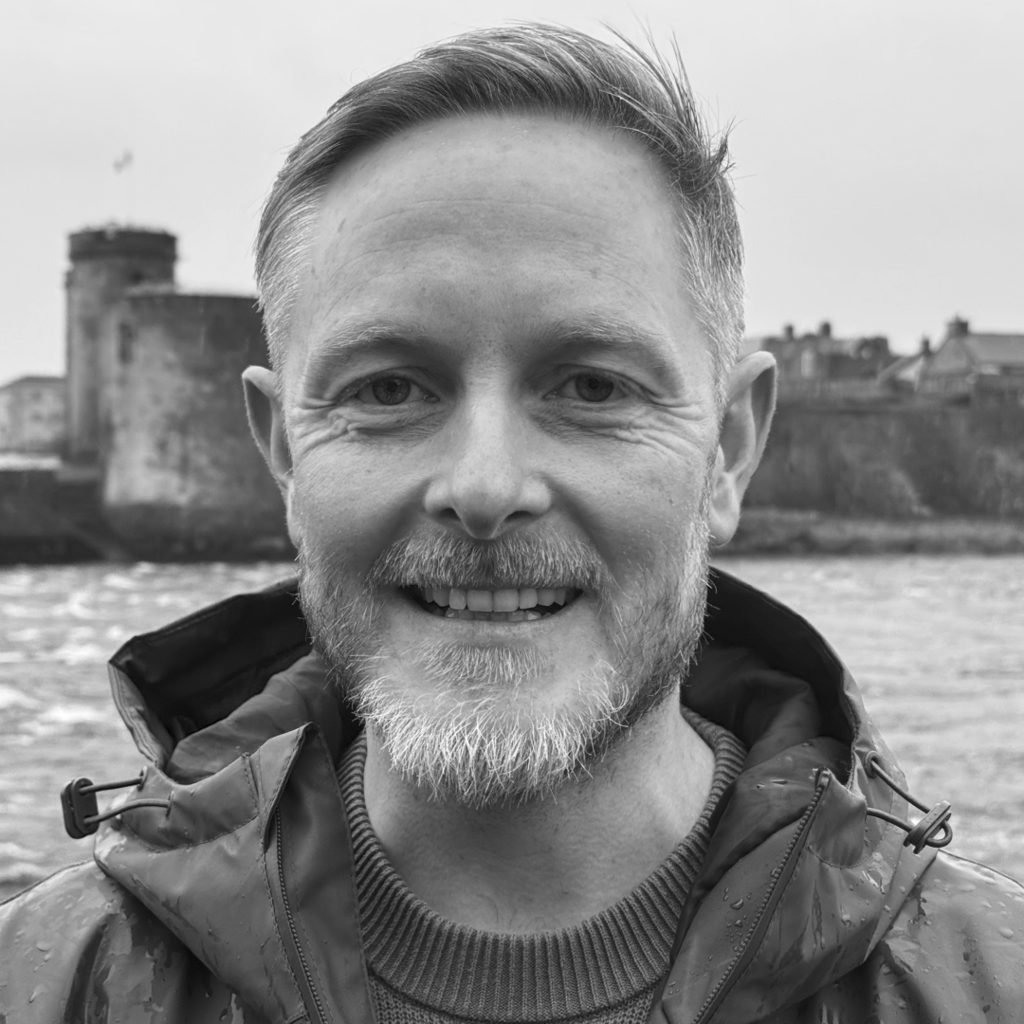
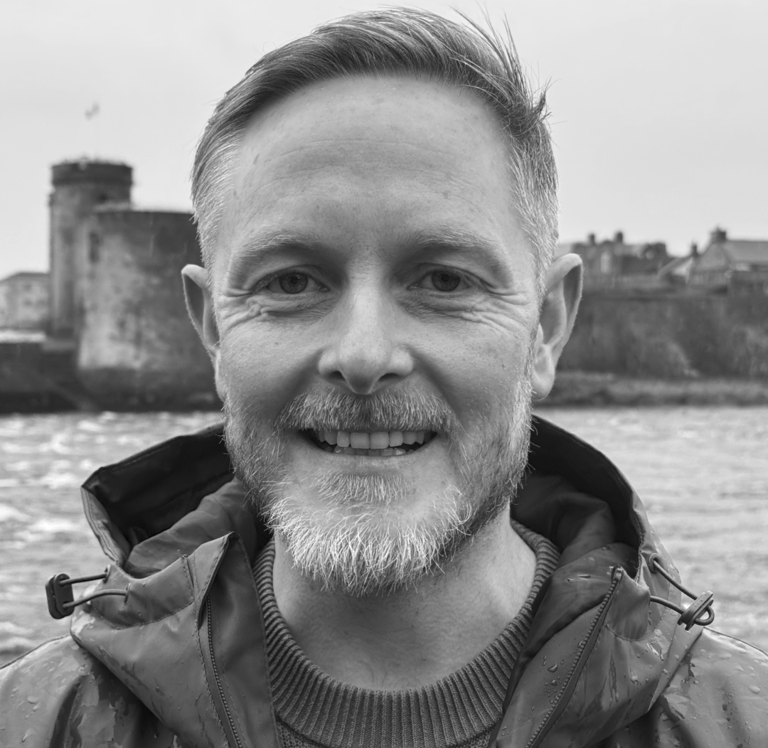
Eoin Ó Conchúir is author of the book Seacht mBealach / Seven Ways: A field guide to Gaeilge Gach Lá and the the founder of Bitesize Irish.
Living in Luimneach / Limerick with his family, he explores the meeting place of language, imagination and place.
Inspired by Ireland’s megalithic past, ancient manuscripts and enduring myths, he has a PhD in global software development from the University of Limerick, and more recently an MA in Art, Psyche and the Creative Imagination from Limerick School of Art and Design (TUS Midwest).
Eoin Ó Conchúir
Chris
Wilson
I write from a deep interest in how sacred landscapes hold layers of memory - knowledge we once grasped intuitively but have half-forgotten, glimpsed again through seasonal rituals like Beltane.
In Beltane: The Turn of Becoming, I trace this tension: the momentary clarity of fire-kindling and dew-washed dawns, where cycles of decay and renewal reveal what we knew in shadows, only for it to fade as we return to daily life. The reflection explores relearning these patterns - root feeding leaf, ember carrying ancestry - while acknowledging our inevitable forgetting. Yet each generation tends the flame anew, honouring the earth's unbroken continuity.